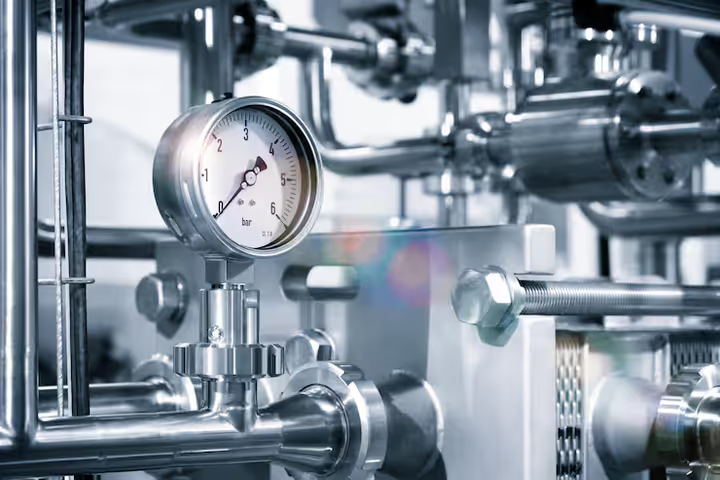
Pressure Transmitters Guide for Industrial Process Monitoring
Pressure transmitters are industrial instruments used to measure the pressure of liquids, gases, or steam within a system. These devices convert pressure readings into standardized electrical signals that can be monitored, recorded, or analyzed by industrial control systems.
Pressure transmitters are widely used in industries such as oil and gas, chemical processing, water treatment, food production, pharmaceuticals, power generation, and manufacturing. Their main purpose is to maintain safe operating conditions, improve process efficiency, and support accurate monitoring.
Modern pressure transmitters are designed for high precision, durability, and compatibility with digital automation systems. Many industrial facilities rely on them for continuous process control and predictive maintenance.
How Pressure Transmitters Work
A pressure transmitter senses pressure through a sensing element such as a diaphragm, strain gauge, piezoelectric sensor, or capacitive sensor. The sensor detects physical pressure changes and converts them into electrical signals.
These signals are then amplified and transformed into standard outputs such as:
- 4–20 mA current signals
- 0–10 V voltage signals
- Digital communication outputs
- Wireless monitoring signals
The transmitted signal is sent to monitoring systems, programmable logic controllers (PLCs), distributed control systems (DCS), or industrial automation platforms.
Pressure transmitters can measure:
- Gauge pressure
- Absolute pressure
- Differential pressure
- Vacuum pressure
Accurate pressure measurement helps operators maintain stable production conditions and detect abnormalities early.
Main Components of Pressure Transmitters
| Component | Function |
|---|---|
| Sensor Element | Detects pressure changes |
| Diaphragm | Transfers pressure to sensing element |
| Signal Converter | Converts measurements into electrical signals |
| Housing | Protects internal electronics |
| Display Unit | Shows pressure readings locally |
| Communication Module | Enables digital or wireless connectivity |
These components work together to provide accurate and reliable pressure data in industrial environments.
Types of Pressure Transmitters
Different industries require different types of pressure measurement technologies. The most common types include:
Gauge Pressure Transmitters
- These transmitters measure pressure relative to atmospheric pressure.
- They are commonly used in pumps, compressors, and hydraulic systems.
- Absolute pressure transmitters measure pressure relative to a complete vacuum.
- They are important in scientific applications and vacuum systems.
Differential Pressure Transmitters
- These devices measure the difference between two pressure points.
- They are widely used in flow measurement, filtration systems, and liquid level monitoring.
- Wireless models transmit data without extensive wiring.
- They support industrial IoT environments and remote monitoring applications.
- Smart transmitters include digital diagnostics, self-calibration functions, and communication protocols such as HART, Modbus, and Foundation Fieldbus.
Importance of Pressure Transmitters in Industry
Pressure transmitters play a major role in industrial automation and operational safety. Accurate pressure data helps industries reduce downtime and improve process consistency.
Key benefits include:
- Improved equipment protection
- Enhanced process stability
- Better energy efficiency
- Reduced maintenance interruptions
- Safer industrial operations
- Accurate data collection
- Automated monitoring support
In critical industries such as chemical manufacturing and power generation, reliable pressure monitoring is essential for regulatory compliance and safe operations.
Common Industrial Applications
Pressure transmitters are used in a wide range of industrial systems and infrastructure projects.
Oil and Gas Industry
- Pressure transmitters monitor pipelines, storage tanks, drilling systems, and refinery equipment.
- They help maintain stable operating conditions in high-pressure environments.
- Water systems use pressure transmitters for pump control, filtration monitoring, and pipeline management.
Food and Beverage Processing
- Sanitary pressure transmitters are used in hygienic production lines to maintain product quality and safety.
- Pharmaceutical facilities require precise pressure monitoring for clean rooms, reactors, and sterile processing systems.
HVAC and Building Automation
- Heating and cooling systems use pressure transmitters to improve airflow control and energy efficiency.
- Pressure transmitters are increasingly used in hydrogen energy systems, geothermal facilities, and industrial battery production.
Features of Modern Pressure Transmitters
Industrial automation has increased demand for advanced transmitter features. Modern systems now include intelligent monitoring capabilities.
Common Features
- Digital communication support
- Remote diagnostics
- Corrosion-resistant materials
- High-temperature resistance
- Compact industrial design
- Wireless connectivity
- Real-time monitoring
- Automatic calibration support
- Industrial IoT integration
Many devices also support cloud-based monitoring and predictive maintenance platforms.
Recent Trends and Developments
Pressure transmitter technology has advanced significantly during the last year due to industrial automation growth and smart manufacturing initiatives.
Industrial IoT Expansion in 2026
- Many manufacturers increased integration of smart pressure transmitters with Industrial Internet of Things (IIoT) systems.
- These systems enable real-time monitoring and predictive analytics across industrial networks.
- Wireless pressure transmitters gained popularity in remote industrial facilities because they reduce wiring complexity and simplify installation.
AI-Based Predictive Maintenance
- Artificial intelligence tools are increasingly used with pressure monitoring systems to identify equipment failures before they occur.
- This trend became more common during 2025 and 2026.
- Industries are adopting energy-efficient monitoring systems to support sustainability goals and reduce operational waste.
- Industrial device manufacturers improved cybersecurity protections in connected instrumentation systems during 2026 to reduce risks associated with industrial network attacks.
Regulations and Industry Standards
Pressure transmitters used in industrial operations often follow international safety and quality standards.
Common Standards
- IEC 61508 Functional Safety Standard
- ISO 9001 Quality Management
- ATEX Certification for hazardous environments
- SIL Safety Integrity Levels
- NEMA enclosure ratings
- IP protection standards
Industries handling hazardous materials must use certified transmitters designed for explosive or corrosive environments.
Environmental regulations may also require accurate pressure monitoring to reduce emissions and maintain safe processing conditions.
Calibration and Maintenance Practices
Regular calibration helps maintain measurement accuracy and equipment reliability.
Recommended Maintenance Steps
- Inspect sensor surfaces regularly
- Verify signal accuracy
- Check wiring connections
- Clean diaphragms carefully
- Perform scheduled calibration
- Monitor environmental conditions
- Replace damaged seals when necessary
Proper maintenance reduces operational risks and extends equipment lifespan.
Useful Tools and Learning Resources
Several industrial platforms and software tools support pressure monitoring, calibration, and diagnostics.
Common Industrial Platforms
- SCADA monitoring systems
- PLC programming platforms
- HART communication tools
- Industrial automation software
- Calibration management systems
- Predictive maintenance platforms
Educational Resources
- Industrial automation training courses
- Instrumentation engineering manuals
- Technical webinars
- Manufacturer documentation
- Process control certification programs
These resources help engineers and technicians understand pressure measurement technologies and industrial applications.
Challenges in Pressure Measurement Systems
Although pressure transmitters are highly reliable, certain operational conditions can affect performance.
Common Challenges
- Extreme temperatures
- Sensor corrosion
- Electrical interference
- Process vibration
- Pressure spikes
- Moisture contamination
- Improper calibration
Advanced transmitter designs are continuously improving resistance to these industrial challenges.
Future Outlook for Pressure Transmitters
The future of pressure transmitter technology is closely connected to industrial automation, digital transformation, and smart manufacturing.
Emerging developments include:
- AI-assisted diagnostics
- Edge computing integration
- Cloud-connected instrumentation
- Enhanced wireless communication
- Compact micro-sensor technology
- Improved energy-efficient operation
As industries continue adopting automation systems, pressure transmitters will remain essential for operational monitoring and process optimization.
FAQs
What is the main purpose of a pressure transmitter?
A pressure transmitter measures pressure and converts it into an electrical signal for monitoring and control systems.
What industries commonly use pressure transmitters?
Industries such as oil and gas, manufacturing, water treatment, pharmaceuticals, food processing, and power generation use pressure transmitters extensively.
What is the difference between a pressure sensor and a pressure transmitter?
A pressure sensor detects pressure changes, while a pressure transmitter converts those readings into standardized output signals for industrial systems.
Why is calibration important for pressure transmitters?
Calibration ensures accurate pressure readings and helps maintain system reliability, safety, and regulatory compliance.
What are smart pressure transmitters?
Smart pressure transmitters include digital communication features, diagnostics, and remote monitoring capabilities for advanced industrial automation.
Conclusion
Pressure transmitters are essential instruments in modern industrial operations. They provide accurate pressure measurement, improve operational safety, and support efficient process control across many industries.
Advancements in smart automation, wireless communication, Industrial IoT integration, and predictive maintenance technologies continue to improve the performance of modern pressure transmitters. As industrial systems become more connected and data-driven, reliable pressure monitoring will remain a critical part of industrial automation and infrastructure management.