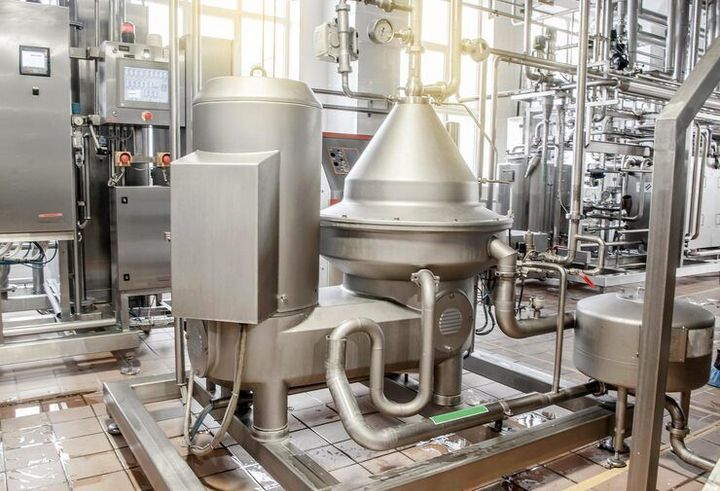
Industrial Mixer Machines Guide for Manufacturing and Processing Industries
Industrial mixer machines are specialized systems designed to combine, blend, emulsify, or homogenize materials in manufacturing and processing environments. These machines are widely used in industries such as food processing, pharmaceuticals, chemicals, construction materials, cosmetics, agriculture, and wastewater treatment.
The primary purpose of industrial mixing equipment is to ensure consistent material composition and improve production efficiency. Industrial mixers can handle powders, liquids, granules, pastes, slurries, and viscous substances depending on the machine design and operational requirements.
Modern industrial manufacturing depends heavily on accurate mixing processes because product quality often relies on uniform distribution of ingredients or materials. Industrial mixer machines help reduce manual labor, improve processing speed, and maintain consistent product standards across large production batches.
How Industrial Mixer Machines Work
Industrial mixer machines operate by applying mechanical force to materials using rotating components such as blades, paddles, ribbons, drums, or agitators. The machine creates movement within the material to achieve even blending and uniform consistency.
The working principle varies depending on the machine type and material properties. Some mixers rotate horizontally, while others use vertical motion or high-speed shear force to combine ingredients effectively.
A standard industrial mixing process generally includes:
Material Feeding
- Raw materials are loaded manually or through automated feeding systems
- Ingredients may include powders, liquids, chemicals, or granules
- Rotating blades or agitators move materials inside the mixing chamber
- Speed and duration are controlled through industrial automation systems
Homogenization
- Materials become evenly distributed throughout the mixture
- Advanced mixers minimize particle separation and material clumping
- Finished material is released through valves, conveyors, or discharge gates
- Some systems support continuous production operations
Automation technology has improved industrial mixing precision by integrating programmable logic controllers, digital monitoring systems, and sensor-based process management.
Major Types of Industrial Mixer Machines
Different industries require different mixing technologies based on material behavior and production volume.
| Mixer Type | Common Applications | Main Feature |
|---|---|---|
| Ribbon Blender | Powder and dry material mixing | Uniform blending with ribbon agitators |
| Paddle Mixer | Food and chemical processing | Gentle material handling |
| Planetary Mixer | Bakery and pharmaceutical industries | High-viscosity material mixing |
| High Shear Mixer | Emulsions and fine particle blending | Rapid homogenization |
| Drum Mixer | Bulk material processing | Rotating drum mechanism |
| Static Mixer | Pipeline fluid blending | No moving mechanical parts |
| Agitator Mixer | Liquid processing systems | Continuous stirring operation |
Important Components of Industrial Mixer Machines
Industrial mixers contain several critical components that support efficient operation and process control.
Mixing Chamber
- Holds the material during processing
- Usually constructed from stainless steel or corrosion-resistant alloys
- Create movement and blending action
- Designed according to material viscosity and density
Motor and Drive System
- Provides mechanical power for mixing operations
- Variable frequency drives help control speed
- Allows operators to adjust timing, speed, and temperature
- Modern systems use touchscreen industrial interfaces
Sealing and Safety Systems
- Prevent leakage and contamination
- Support industrial safety compliance
- Enables controlled material release
- Important for continuous production lines
Importance of Industrial Mixer Machines
Industrial mixer machines play a major role in maintaining manufacturing efficiency and product consistency.
Industries processing large volumes of materials require reliable mixing systems to maintain quality standards. In sectors such as pharmaceuticals and food manufacturing, improper mixing can affect product safety, stability, and regulatory compliance.
Industrial mixing equipment also supports:
- Faster production cycles
- Reduced material waste
- Improved product consistency
- Better process automation
- Lower manual handling requirements
- Enhanced industrial hygiene standards
In chemical industries, mixers help ensure accurate formulation of compounds and improve reaction efficiency. In construction material manufacturing, industrial mixers create uniform concrete, adhesives, and coatings.
Real-World Applications of Industrial Mixer Machines
Industrial mixer machines are used across multiple sectors worldwide.
Food Processing Industry
- Mixing flour, spices, dairy products, sauces, and beverages
- Supporting hygienic processing standards
- Blending active pharmaceutical ingredients
- Producing tablets, creams, and medical powders
Chemical Industry
- Processing paints, coatings, detergents, and polymers
- Supporting controlled chemical reactions
- Mixing lotions, creams, gels, and cosmetic powders
- Maintaining texture consistency
Agriculture Sector
- Preparing fertilizer mixtures and animal feed
- Supporting large-scale agricultural production
- Mixing chemicals for water purification
- Supporting environmental processing systems
Problems Industrial Mixer Machines Help Solve
Manufacturing industries often face challenges related to inconsistent material blending, production inefficiency, and contamination risks.
Industrial mixer machines address these problems by:
- Improving ingredient uniformity
- Reducing human error in material handling
- Enhancing large-scale production capacity
- Supporting repeatable manufacturing processes
- Preventing segregation of materials
- Improving processing speed
Advanced automated mixers also help manufacturers monitor temperature, pressure, and mixing duration more accurately.
Industrial Automation and Smart Mixing Technology
Industrial mixing systems have evolved significantly with Industry 4.0 technologies.
Modern smart mixers now include:
- IoT-enabled monitoring systems
- Real-time production analytics
- Automated recipe management
- Remote operational control
- Predictive maintenance systems
- Energy-efficient motor technology
Industrial automation platforms help manufacturers optimize production efficiency while reducing operational downtime.
Cloud-connected industrial control systems are becoming increasingly common in large manufacturing facilities.
Recent Trends and Developments
Several developments in industrial mixing technology have emerged during 2025 and 2026.
Energy-Efficient Mixing Systems
Manufacturers are adopting energy-saving motors and optimized blade designs to reduce industrial power consumption.
Food and pharmaceutical industries are increasingly using sanitary-grade stainless steel mixing systems for contamination control.
AI-Based Process Monitoring
Artificial intelligence is being integrated into industrial automation systems for predictive maintenance and production optimization.
Many industries are implementing low-emission and waste-reduction mixing technologies to align with environmental sustainability goals.
Modular systems allow easier maintenance and flexible production scaling for modern manufacturing facilities.
Industrial Standards and Regulatory Considerations
Industrial mixer machines often operate under strict manufacturing and safety regulations depending on the industry.
Food Industry Regulations
- Compliance with food safety standards
- Hygienic equipment design requirements
- Material contamination prevention measures
Pharmaceutical Compliance
- Good Manufacturing Practice guidelines
- Validation and process documentation standards
Workplace Safety Regulations
- Emergency shutdown systems
- Operator safety guards
- Noise and vibration control standards
Environmental Requirements
- Waste reduction practices
- Energy efficiency monitoring
- Emission management systems
Manufacturers commonly use stainless steel materials and sealed mixing systems to comply with industrial hygiene and environmental regulations.
Useful Tools and Learning Resources
Professionals interested in industrial mixing technology can explore several technical resources and platforms.
Engineering Software
- CAD design tools for industrial equipment planning
- Process simulation software
- Industrial automation platforms
Technical Learning Resources
- Industrial engineering publications
- Manufacturing process training programs
- Mechanical design reference materials
Industrial Standards Organizations
- International manufacturing standards associations
- Workplace safety organizations
- Food and pharmaceutical compliance authorities
Automation Platforms
- PLC programming systems
- Industrial IoT monitoring tools
- Process analytics dashboards
FAQs
What is the main purpose of an industrial mixer machine?
Industrial mixer machines are used to blend, combine, or homogenize materials in manufacturing and processing industries to achieve consistent product quality.
Which industries use industrial mixer machines the most?
Food processing, pharmaceuticals, chemicals, cosmetics, agriculture, and construction material manufacturing are among the largest users of industrial mixing equipment.
What materials are commonly used in industrial mixer construction?
Most industrial mixers are made from stainless steel or corrosion-resistant alloys to support durability, hygiene, and chemical resistance.
What is the difference between batch mixers and continuous mixers?
Batch mixers process materials in separate production cycles, while continuous mixers operate without interruption for large-scale manufacturing.
How does automation improve industrial mixing systems?
Automation improves accuracy, consistency, monitoring, and operational efficiency while reducing manual intervention and production downtime.
Conclusion
Industrial mixer machines are essential components of modern manufacturing and processing industries. They support efficient material blending, improve product consistency, and enable large-scale industrial production across multiple sectors.
As manufacturing technologies continue to evolve, industrial mixers are becoming more advanced through automation, smart monitoring systems, and energy-efficient engineering. Industries are also focusing on hygienic designs, sustainable production methods, and digital process optimization.
Understanding industrial mixer machine types, functions, applications, and operational standards helps businesses and technical professionals improve production quality and maintain efficient industrial workflows.