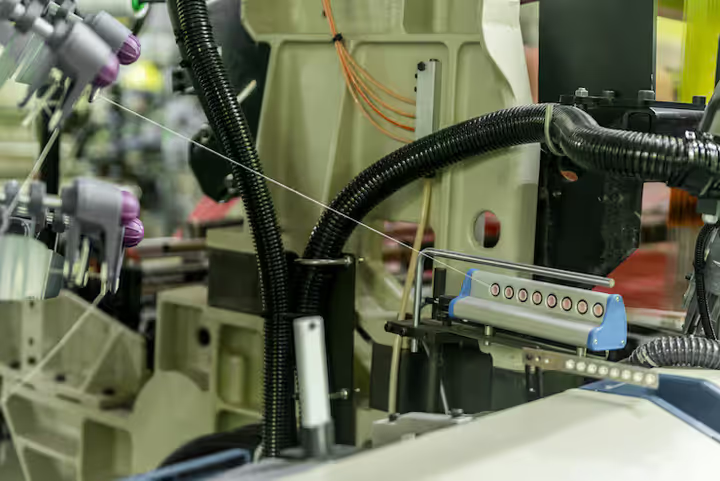
Cable Stripping Machines Overview for Manufacturing and Recycling
Cable stripping machines are specialized pieces of equipment designed to remove the outer insulation or protective covering from electrical cables and wires without damaging the conductive material inside. They are widely used in electrical manufacturing, recycling, electronics production, automotive assembly,
The development of cable stripping machines reflects the growing demand for reliable electrical connections and efficient wire processing. As industries expanded and electrical systems became more complex, manually stripping cables became increasingly difficult, especially when handling large quantities or thick industrial cables. Modern equipment was introduced to improve consistency, reduce material damage, and simplify repetitive tasks.
Different cable types require different stripping methods. Electrical cables vary in diameter, insulation material, conductor design, and intended application. Because of these differences, manufacturers have developed machines that accommodate a wide range of cable sizes and insulation materials.
Common Types of Cable Stripping Machines
Several machine categories are used depending on production requirements:
| Machine Type | Typical Application | Suitable Cable Size |
|---|---|---|
| Manual Cable Stripping Machine | Small-scale processing | Thin to medium cables |
| Semi-Automatic Machine | Medium production environments | Multiple cable sizes |
| Automatic Cable Stripping Machine | Continuous manufacturing | High-volume processing |
| Rotary Blade Machine | Thick insulation removal | Large industrial cables |
| Precision Wire Stripping Machine | Electronics manufacturing | Fine electrical wires |
Each type is designed to process cables efficiently while helping preserve conductor quality.
Importance
Cable stripping machines play an important role across many industries because electrical systems depend on properly prepared wire ends. Damaged conductors, uneven stripping, or incomplete insulation removal may affect electrical performance and assembly quality.
Manufacturing Efficiency
In manufacturing environments, cable stripping machines reduce repetitive manual work by processing wires with consistent stripping lengths. This supports standardized production across electrical assemblies.
Recycling Applications
Cable recycling facilities use stripping machines to separate insulation from copper or aluminum conductors. Recovering these materials contributes to material reuse while reducing unnecessary waste.
Electrical Installation
Electricians and maintenance personnel frequently prepare cables before connecting switches, terminals, connectors, or control panels. Mechanical stripping equipment provides greater consistency than repeated manual stripping, particularly for larger cable volumes.
Electronics Production
Consumer electronics often contain numerous small wires that require accurate insulation removal. Precision cable stripping machines help prepare delicate conductors without excessive damage.
Automotive Industry
Modern vehicles contain extensive wiring harnesses connecting electronic systems, lighting, sensors, and control units. Cable stripping machines assist in preparing these harnesses during manufacturing and maintenance.
Advantages of Cable Stripping Machines
Some commonly recognized advantages include:
- Consistent insulation removal
- Reduced conductor damage
- Improved processing accuracy
- Compatibility with different cable sizes
- Better production consistency
- Reduced material waste
- Support for large processing volumes
Although machine capabilities differ by design, selecting equipment appropriate for the cable type contributes to reliable processing.
Recent Updates
Cable stripping machines continue to evolve alongside broader industrial automation and sustainability initiatives. Rather than dramatic changes, recent developments focus on improving precision, adaptability, and operational efficiency.
Greater Automation
Automatic cable stripping machines now commonly include programmable settings that allow operators to process multiple cable sizes with minimal manual adjustment. Digital controls simplify setup for changing production requirements.
Smart Monitoring Features
Many industrial machines now include sensors that monitor stripping depth, blade position, and cable movement. These systems help maintain consistent processing throughout production.
Improved Blade Technology
Machine manufacturers continue developing longer-lasting cutting blades capable of processing different insulation materials with reduced wear. Blade improvements support more consistent stripping quality over extended operating periods.
Energy-Conscious Equipment Design
Industrial equipment manufacturers increasingly focus on reducing unnecessary power consumption while maintaining processing performance. Modern electrical drive systems contribute to more efficient machine operation.
Flexible Cable Compatibility
Many newer cable stripping machines accommodate a wider range of cable diameters without extensive mechanical changes. Adjustable guides and programmable settings increase flexibility for mixed production environments.
Integration with Production Systems
Some industrial facilities integrate cable stripping machines with automated wire cutting, marking, terminal crimping, and inspection equipment. This creates continuous processing workflows within manufacturing lines.
Overall, recent industry developments emphasize precision, automation, adaptability, and resource efficiency rather than major changes to the fundamental stripping process.
Laws or Policies
Cable stripping machines themselves are generally governed through workplace safety regulations, electrical standards, machinery safety requirements, and environmental policies rather than product-specific legislation.
Workplace Safety Regulations
Many countries require employers to maintain safe working environments when operating industrial machinery. These regulations typically address:
- Operator protection
- Machine guarding
- Emergency stop functions
- Equipment maintenance
- Safety training
Machinery Safety Standards
Industrial equipment is commonly designed according to machinery safety standards that address mechanical hazards, electrical protection, and operational safety. Compliance requirements vary by country and industry.
Electrical Standards
Cable preparation performed using stripping machines often supports electrical installations that follow national electrical codes or recognized technical standards. Proper insulation removal contributes to reliable electrical connections.
Environmental Regulations
Cable recycling operations frequently follow environmental regulations governing waste management and material recovery. Separating recyclable metals from insulation supports responsible material processing.
Occupational Health Requirements
Industrial workplaces may implement procedures covering:
- Personal protective equipment
- Noise management
- Safe machine operation
- Preventive maintenance
- Risk assessment
Specific regulatory requirements differ between countries, industries, and workplace environments.
Tools and Resources
Several resources help individuals and organizations understand cable processing, electrical standards, and machinery operation.
Standards Organizations
Technical standards organizations publish guidance related to electrical systems, cable specifications, machinery safety, and industrial practices. These publications help manufacturers maintain consistent production methods.
Cable Size Calculators
Electrical cable calculators assist users in estimating conductor size, voltage drop, and current capacity for various applications. These tools complement cable preparation activities.
Equipment Manuals
Machine manufacturers provide operation manuals containing information about machine settings, blade adjustment, maintenance schedules, troubleshooting, and safety procedures.
Technical Training Materials
Educational institutions, industry associations, and technical learning platforms publish instructional materials covering:
- Cable identification
- Wire preparation
- Electrical assembly
- Industrial automation
- Manufacturing practices
Maintenance Checklists
Routine inspection checklists commonly include:
- Blade condition
- Roller alignment
- Cable guides
- Motor operation
- Safety switches
- Lubrication points
- Cleaning procedures
Regular maintenance helps maintain consistent machine performance throughout its operating life.
FAQs
What are cable stripping machines used for?
Cable stripping machines remove insulation from electrical cables while preserving the internal conductor. They are commonly used in electrical manufacturing, recycling, electronics production, automotive assembly, and maintenance activities.
How do cable stripping machines work?
Most cable stripping machines guide the cable through adjustable blades that cut the insulation to a controlled depth. Rollers or feeding mechanisms move the cable while the insulation is separated from the conductor.
Can one cable stripping machine process different cable sizes?
Many modern cable stripping machines include adjustable settings that accommodate multiple cable diameters and insulation types. The supported size range depends on the machine design and specifications.
Are cable stripping machines suitable for cable recycling?
Yes. Cable recycling operations frequently use cable stripping machines to separate insulation from copper or aluminum conductors, allowing valuable materials to be recovered for further processing.
What maintenance do cable stripping machines require?
Routine maintenance generally includes cleaning, inspecting blades, checking moving components, verifying machine alignment, lubricating mechanical parts where appropriate, and following the manufacturer's maintenance schedule.
Conclusion
Cable stripping machines have become an important part of electrical manufacturing, recycling, automotive production, electronics assembly, and industrial maintenance. Their primary purpose is to remove cable insulation accurately while helping preserve the integrity of the conductor beneath. Recent developments emphasize automation, adaptable machine settings, improved monitoring systems, and efficient operation. As electrical technologies continue to expand across industries, cable stripping machines remain a practical component of modern wire processing.