Extrusion Machine Overview for Manufacturing Applications
An extrusion machine is industrial equipment used to shape materials into continuous profiles or products by forcing raw material through a specially designed die. This process is widely used in manufacturing industries for producing pipes, sheets, films, cables, food products, and metal components.
Extrusion technology plays a major role in modern industrial production because it allows consistent shaping, faster processing, and reduced material waste. Industries such as plastics, packaging, automotive, construction, food processing, and pharmaceuticals rely heavily on extrusion systems for large-scale production.
The extrusion process supports automation, precision manufacturing, and energy-efficient production methods. As industrial automation and smart manufacturing continue to expand, extrusion machines are becoming more advanced and digitally controlled.
How an Extrusion Machine Works
An extrusion machine operates by heating and compressing raw material before pushing it through a die opening. The die determines the final shape of the product.
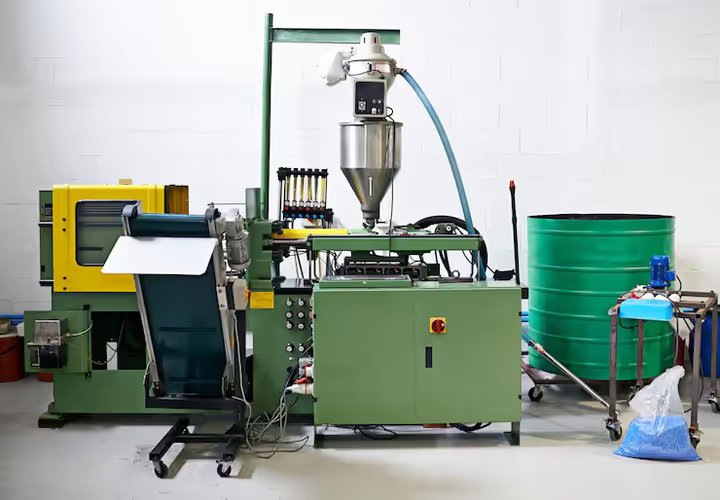
The process usually begins with feeding raw materials such as plastic pellets, metal billets, rubber compounds, or food ingredients into a hopper. The material then moves through a rotating screw inside a heated barrel.
Heat and pressure soften or melt the material, allowing it to flow smoothly toward the die. Once the material exits the die, it is cooled and cut into the required size or length.
The extrusion process is valued because it supports continuous production with high consistency.
Main Steps in the Extrusion Process
- Material feeding through a hopper
- Heating and melting inside the barrel
- Compression using rotating screws
- Shaping through a die
- Cooling and solidification
- Cutting or winding finished products
Main Components of an Extrusion Machine
Extrusion machines include several important components that work together for smooth production.
| Component | Function |
|---|---|
| Hopper | Stores and feeds raw material |
| Barrel | Houses the screw and heating system |
| Screw | Moves and compresses material |
| Heater Bands | Provide controlled temperature |
| Die | Shapes the material into final form |
| Cooling System | Solidifies the product after extrusion |
| Control Panel | Manages speed, temperature, and pressure |
| Cutter or Winder | Finishes the product into usable form |
Modern industrial extrusion systems also include sensors, automated monitoring systems, and energy management controls.
Types of Extrusion Machines
Different extrusion machines are designed for specific materials and industrial applications.
Single Screw Extrusion Machines
- Common in plastic manufacturing
- Suitable for simple extrusion processes
- Used for pipes, sheets, and packaging films
Twin Screw Extrusion Machines
- Provide better mixing and material control
- Used in food processing, pharmaceuticals, and advanced polymers
- Suitable for complex formulations
Plastic Extrusion Machines
- Used for producing plastic pipes, tubing, profiles, and films
- Common in packaging and construction industries
- Shape aluminum, copper, and steel components
- Used in aerospace, transportation, and infrastructure manufacturing
Food Extrusion Machines
- Process snacks, pasta, cereals, and pet food
- Maintain consistent texture and shape
- Produce seals, hoses, and industrial rubber products
- Used in automotive and machinery sectors
Importance of Extrusion Machines in Industry
Extrusion machines support high-volume production with precision and efficiency. Manufacturers use extrusion systems to create products with consistent dimensions and surface quality.
Industrial extrusion technology helps reduce manufacturing waste because materials are continuously processed and shaped. Automated systems also reduce manual handling and improve operational efficiency.
The extrusion process is important for industries requiring lightweight materials, durable components, and large-scale production capabilities.
Benefits of Extrusion Technology
- Continuous production capability
- High manufacturing speed
- Reduced material waste
- Improved product consistency
- Support for automation systems
- Energy-efficient processing
- Flexible material handling
Real-World Applications of Extrusion Machines
Extrusion machines are used across many industries because they support diverse production requirements.
Construction Industry
- Plastic pipes and tubing
- Window frames and profiles
- Insulation materials
- Roofing membranes
Automotive Manufacturing
- Wire insulation
- Rubber seals
- Plastic trim components
- Lightweight structural parts
Packaging Industry
- Flexible packaging films
- Food containers
- Protective wrapping materials
Electrical Industry
- Cable insulation
- Protective conduits
- Connector housings
Food Processing
- Breakfast cereals
- Snack products
- Textured protein foods
- Pasta production
Medical Industry
- Medical tubing
- Catheter components
- Sterile packaging materials
Problems Solved by Extrusion Machines
Extrusion systems address several manufacturing challenges faced by industrial producers.
Traditional shaping methods may involve high material waste, slower production rates, and inconsistent product quality. Extrusion machines help improve productivity while maintaining uniform product dimensions.
They also support continuous manufacturing, which is important for industries with high production demands.
Manufacturing Challenges Addressed
- Inconsistent product sizing
- Slow production cycles
- Excessive raw material waste
- Limited automation capability
- High operational downtime
- Complex shaping requirements
Advanced extrusion machinery also improves energy management and process monitoring.
Recent Trends and Developments in Extrusion Technology
Extrusion machine technology has advanced significantly during the last year as industries adopt automation and sustainable manufacturing methods.
In 2025, many manufacturers introduced smart extrusion systems with real-time monitoring and predictive maintenance capabilities. These systems use industrial sensors and artificial intelligence tools to improve machine performance and reduce downtime.
Energy-efficient extrusion systems are also becoming more common as industries focus on environmental regulations and carbon reduction goals.
Recent Industry Developments
- Increased adoption of Industry 4.0 automation in 2025
- Growth of AI-based process monitoring systems
- Improved energy-efficient heating technologies
- Expansion of recycled plastic extrusion applications
- Advanced digital control interfaces
- Integration of cloud-based production analytics
Biodegradable and recyclable material processing has also become an important focus area in plastic extrusion manufacturing.
Regulations and Industrial Standards
Extrusion machine operations often follow industrial safety and quality regulations depending on the application and region.
Manufacturers commonly follow standards related to machinery safety, environmental protection, and material handling.
Important Standards and Guidelines
- ISO manufacturing standards for industrial equipment
- Occupational safety regulations for machine operation
- Environmental rules for plastic recycling and emissions
- Electrical safety standards for automated machinery
- Food-grade compliance rules for food extrusion systems
Industrial facilities also implement preventive maintenance programs and operator safety training to reduce operational risks.
Useful Tools and Learning Resources
Many tools and educational resources help manufacturers and engineers improve extrusion processes and machine performance.
Common Industrial Tools
- CAD software for die design
- Industrial automation platforms
- Temperature monitoring systems
- Predictive maintenance software
- Process simulation tools
Educational Resources
- Manufacturing engineering publications
- Industrial automation training platforms
- Polymer processing courses
- Mechanical engineering learning portals
- Industry conference presentations
Technical documentation from machinery manufacturers also helps operators understand equipment setup and maintenance procedures.
Future of Extrusion Machines
The future of extrusion technology is strongly connected to automation, sustainability, and smart manufacturing systems.
Manufacturers are investing in intelligent extrusion systems capable of monitoring material flow, temperature control, and production efficiency in real time. Machine learning technology is expected to improve defect detection and predictive maintenance.
Sustainable manufacturing is also influencing extrusion design. Many companies are developing systems that process recycled polymers and biodegradable materials more efficiently.
Industrial robotics and digital twin technology may further improve production accuracy and operational efficiency over the next few years.
FAQs
What is the primary purpose of an extrusion machine?
An extrusion machine shapes materials into continuous products by forcing softened or melted material through a die. It supports efficient large-scale manufacturing.
Which industries use extrusion machines most frequently?
Industries such as plastics, automotive, construction, packaging, food processing, and medical manufacturing commonly use extrusion technology.
What materials can be processed in extrusion machines?
Extrusion machines can process plastics, metals, rubber compounds, food ingredients, and some pharmaceutical materials.
What is the difference between single screw and twin screw extrusion machines?
Single screw machines are simpler and commonly used for standard plastic processing, while twin screw systems provide better mixing and advanced material handling capabilities.
Why is automation important in modern extrusion systems?
Automation improves production accuracy, reduces downtime, supports predictive maintenance, and increases overall manufacturing efficiency.
Conclusion
Extrusion machines are essential industrial systems used to produce continuous products with high precision and efficiency. They support modern manufacturing across industries including plastics, food processing, automotive production, construction, and medical equipment manufacturing.
The extrusion process helps manufacturers improve consistency, reduce waste, and support large-scale automated production. Recent developments in artificial intelligence, industrial automation, and sustainable manufacturing are further transforming extrusion technology.
As industries continue focusing on smart manufacturing and environmentally responsible production methods, extrusion machines will remain an important part of advanced industrial processing systems.