Manufacturing Analytics Software Overview for Industrial Data Intelligence Systems
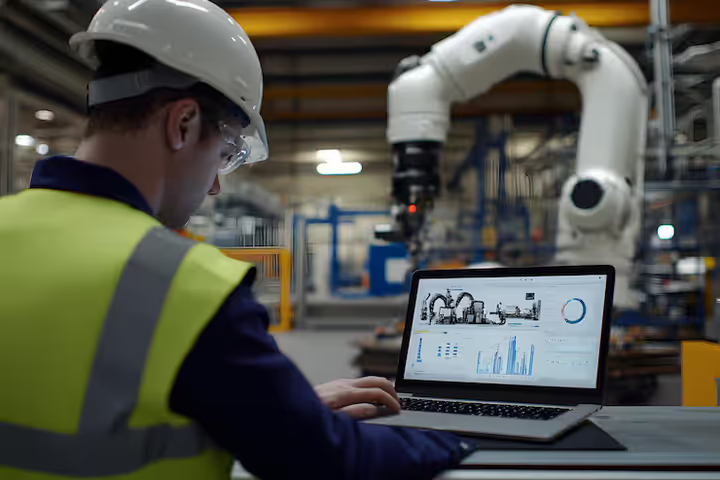
Manufacturing analytics software is a digital system designed to collect, process, and analyze data generated across production environments. Its primary purpose is to improve visibility into operations, support informed decision-making, and enhance efficiency across industrial processes.
Modern factories generate large volumes of data from machines, sensors, production lines, and enterprise systems. This software transforms raw data into structured insights that help teams understand performance, detect inefficiencies, and improve production outcomes.
The growing shift toward digital manufacturing has made analytics systems a central part of industrial transformation, especially in smart factory ecosystems.
How Manufacturing Analytics Systems Operate
Manufacturing analytics software works through a layered architecture that connects data sources, processing engines, and visualization tools. It integrates with machines, IoT devices, ERP systems, and cloud platforms to create a unified data environment.
Data Collection Layer
- Machine sensors capturing real-time production data
- Industrial IoT devices tracking temperature, vibration, and speed
- Enterprise systems generating operational records
Data Processing Layer
- Data cleaning and normalization
- Aggregation of structured and unstructured data
- Real-time stream processing for immediate insights
Analytics and Modeling Layer
- Statistical analysis for performance trends
- Predictive models for forecasting failures
- Machine learning algorithms for anomaly detection
Visualization Layer
- Dashboards displaying KPIs and metrics
- Interactive charts for production monitoring
- Alerts and automated reporting systems
This layered structure ensures that data moves efficiently from raw input to actionable insights.
Role and Impact in Modern Manufacturing
Manufacturing analytics software plays a critical role in improving industrial performance. It addresses key operational challenges such as inefficiency, downtime, and inconsistent product quality.
Key Operational Problems It Solves
- Lack of real-time visibility into production lines
- Unplanned equipment downtime
- Inefficient resource utilization
- Quality inconsistencies in output
- Difficulties in forecasting demand and production needs
By addressing these challenges, it enables more stable and optimized manufacturing environments.
Core Features, Components, and Types
Manufacturing analytics platforms include several essential features designed to support industrial intelligence.
Key Features of Analytics Platforms
- Real-time production monitoring dashboards
- Predictive maintenance systems
- Energy consumption tracking
- Quality control analytics
- Supply chain performance analysis
- Automated reporting and alerts
Types of Manufacturing Analytics
- Descriptive analytics for historical performance review
- Diagnostic analytics for root-cause analysis
- Predictive analytics for forecasting outcomes
- Prescriptive analytics for decision optimization
Core Components
- Data ingestion modules
- Cloud or on-premise storage systems
- AI and machine learning engines
- Visualization and reporting interfaces
- Integration APIs for enterprise systems
These components work together to create a connected industrial intelligence ecosystem.
Comparative Structure of Manufacturing Analytics Systems
| Layer | Function | Example Output | Industrial Benefit |
|---|---|---|---|
| Data Collection | Captures machine and sensor data | Temperature, vibration, cycle time | Real-time visibility |
| Data Processing | Cleans and organizes data | Structured datasets | Accurate analysis |
| Analytics Engine | Applies models and algorithms | Predictions, patterns | Smarter decisions |
| Visualization | Displays insights | Dashboards, reports | Easy interpretation |
| Action Layer | Triggers responses | Alerts, automation signals | Faster response time |
Real-World Applications Across Industries
Manufacturing analytics software is widely used across multiple industrial sectors.
Automotive Manufacturing
- Monitoring assembly line efficiency
- Tracking component quality
- Predicting equipment failures
Electronics Production
- Defect detection in micro-components
- Yield optimization in semiconductor processes
- Cleanroom environment monitoring
Pharmaceutical Manufacturing
- Batch quality analysis
- Compliance tracking
- Process validation support
Heavy Machinery Production
- Equipment lifecycle analysis
- Maintenance scheduling optimization
- Production capacity forecasting
Food and Beverage Industry
- Production consistency monitoring
- Temperature and safety tracking
- Supply chain optimization
These applications demonstrate its versatility across different manufacturing domains.
Recent Trends and Developments (2026)
Manufacturing analytics software has evolved significantly with advancements in artificial intelligence, edge computing, and industrial IoT.
2026 Key Developments
- January 2026: Expansion of AI-driven predictive maintenance models improving failure detection accuracy in industrial environments
- March 2026: Increased adoption of edge analytics systems reducing latency in factory data processing
- June 2026: Integration of generative AI for automated production reporting and insight generation
- Ongoing 2026 trend: Greater use of digital twins for real-time simulation of factory operations
Emerging Technological Trends
- AI-powered autonomous manufacturing systems
- Real-time edge-to-cloud data synchronization
- Advanced anomaly detection using deep learning
- Integration of 5G-enabled industrial sensors
- Expansion of digital twin ecosystems
These trends are shaping the next generation of intelligent manufacturing systems.
Regulatory and Compliance Considerations
Manufacturing analytics systems must align with several industrial and data-related regulations.
Key Compliance Areas
- Data privacy regulations for industrial data handling
- Cybersecurity standards for critical infrastructure protection
- Industrial safety compliance for automated systems
- Environmental reporting requirements for emissions tracking
Relevant Frameworks
- ISO 27001 for information security management
- IEC 62443 for industrial cybersecurity
- GDPR principles for data governance in global operations
- Industry-specific quality management standards (such as ISO 9001)
Compliance ensures secure and reliable operation of analytics platforms in regulated environments.
Tools, Platforms, and Learning Resources
Several platforms and tools are widely used in manufacturing analytics ecosystems.
Industrial Analytics Platforms
- Siemens Opcenter Analytics
- Rockwell FactoryTalk Analytics
- PTC ThingWorx Industrial IoT Platform
- Microsoft Azure IoT + Data Analytics Suite
- IBM Maximo Application Suite
Supporting Technologies
- Apache Kafka for data streaming
- Python for machine learning modeling
- Power BI for visualization
- TensorFlow for predictive analytics
Learning Resources
- Industrial IoT and smart manufacturing courses
- Data science and machine learning training programs
- Cloud computing certifications focused on industrial applications
- Manufacturing process engineering study materials
These tools and resources help professionals understand and implement analytics systems effectively.
Frequently Asked Questions
What is manufacturing analytics software used for?
It is used to analyze production data, improve efficiency, monitor performance, and support decision-making in industrial environments.
How does it improve factory performance?
It identifies inefficiencies, predicts equipment failures, and provides insights that help optimize production processes.
Can it work with existing industrial systems?
Yes, most platforms integrate with ERP systems, IoT devices, and industrial machinery through APIs and connectors.
Is real-time monitoring possible?
Yes, many modern systems provide real-time dashboards and alerts using streaming data technologies.
What industries benefit the most?
Automotive, electronics, pharmaceuticals, heavy machinery, and food production industries benefit significantly from these systems.
Conclusion
Manufacturing analytics software is a foundational component of modern industrial transformation. It enables factories to shift from reactive operations to data-driven and predictive systems. By integrating real-time data collection, advanced analytics, and visualization tools, it improves operational efficiency and decision-making accuracy.
With ongoing advancements in AI, edge computing, and industrial IoT, these systems are expected to become even more intelligent and autonomous. As manufacturing environments continue to evolve, analytics software will remain central to achieving higher productivity, quality control, and operational resilience.