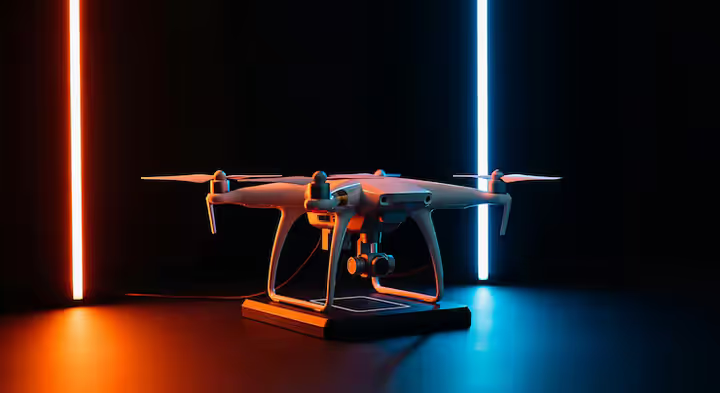
Industrial Drone Solutions Overview for Infrastructure Monitoring
Industrial drone solutions refer to the use of unmanned aerial vehicles (UAVs) and related software systems for industrial operations, monitoring, inspection, mapping, and data collection. These drones are designed to support industries such as construction, energy, agriculture, logistics, mining, telecommunications, and manufacturing.
Unlike consumer drones, industrial drones are built with advanced sensors, automation capabilities, longer flight durations, and secure communication systems. They are often integrated with artificial intelligence, cloud platforms, and real-time analytics tools to improve operational efficiency and workplace safety.
Industrial organizations increasingly use drone technology to reduce manual inspections, access difficult environments, and collect accurate aerial data in less time.
How Industrial Drone Solutions Work
Industrial drone systems combine hardware, software, communication networks, and analytics platforms. The drone captures aerial information using onboard sensors and sends data to operators or cloud-based systems for analysis.
Most industrial drone workflows follow these steps:
- Flight planning using mapping software
- Automated or manual drone deployment
- Data collection through cameras and sensors
- Real-time transmission of aerial information
- Processing of images and operational data
- Reporting and analysis for decision-making
Modern drones can operate using GPS navigation, obstacle avoidance systems, autonomous flight paths, and AI-powered monitoring tools.
Key Components of Industrial Drone Systems
Flight Hardware
- Airframe structure
- Propulsion systems
- Battery management systems
- Navigation controllers
Imaging and Sensor Technology
- High-resolution cameras
- Thermal imaging sensors
- LiDAR scanners
- Multispectral sensors
- Gas detection systems
Software Platforms
- Flight management software
- Drone mapping applications
- Data analytics dashboards
- Cloud storage systems
Communication Systems
- GPS connectivity
- Radio transmission modules
- Satellite communication support
- Secure wireless networking
Types of Industrial Drone Solutions
| Drone Type | Primary Use | Key Benefit |
|---|---|---|
| Fixed-Wing Drones | Large-area surveying | Long flight coverage |
| Multi-Rotor Drones | Inspection and monitoring | Precise hovering capability |
| Hybrid VTOL Drones | Mapping and logistics | Flexible operations |
| Autonomous Drones | Automated inspections | Reduced manual involvement |
| Indoor Industrial Drones | Warehouse and factory monitoring | Navigation in confined spaces |
Importance of Industrial Drone Technology
Industrial drone solutions help organizations improve safety, efficiency, and data accuracy. Many industries rely on drones to inspect locations that may be hazardous or difficult for workers to access.
Important benefits include:
- Faster infrastructure inspections
- Reduced operational downtime
- Improved worker safety
- Accurate aerial mapping
- Better asset management
- Real-time monitoring capabilities
- Enhanced predictive maintenance
Industries using drones can often collect operational insights more quickly compared to traditional manual inspection methods.
Real-World Industrial Drone Applications
Energy and Utilities
Energy companies use drones to inspect:
- Power lines
- Wind turbines
- Solar farms
- Oil pipelines
- Offshore platforms
Thermal imaging drones can detect overheating equipment and infrastructure faults before failures occur.
Construction and Infrastructure
Construction firms use drones for:
- Site mapping
- Progress tracking
- Equipment monitoring
- Structural inspections
- Safety assessments
Drone-generated 3D models help project teams improve planning accuracy.
Mining Operations
Mining companies deploy industrial drones for:
- Terrain mapping
- Volume calculations
- Safety monitoring
- Environmental assessment
Drone-based surveying reduces exposure to hazardous mining environments.
Agriculture and Environmental Monitoring
Agricultural drones support:
- Crop analysis
- Soil monitoring
- Irrigation planning
- Pest detection
Environmental agencies also use drones to monitor forests, wildlife, and water resources.
Telecommunications
Telecommunication companies use drones to inspect:
- Cell towers
- Network infrastructure
- Remote communication systems
Drones reduce the need for manual tower climbing operations.
Problems Solved by Industrial Drone Solutions
Industrial drones address several operational challenges faced by organizations.
Safety Risks
Drones reduce the need for workers to access dangerous heights, confined spaces, or unstable environments.
Traditional inspections may require scaffolding, helicopters, or manual climbing. Drones accelerate inspection workflows significantly.
Limited Data Visibility
Aerial imaging and sensor technology provide high-resolution operational data for analysis and planning.
Predictive monitoring helps organizations identify issues before equipment failure occurs.
Difficult Terrain Access
Drones can reach remote, offshore, or hazardous locations more efficiently than traditional methods.
Advanced Features in Modern Industrial Drones
Industrial drone technology has advanced rapidly in recent years.
Artificial Intelligence Integration
AI systems help drones:
- Detect anomalies
- Identify infrastructure defects
- Track assets automatically
- Analyze aerial imagery
Autonomous Navigation
Autonomous drones can:
- Follow pre-programmed routes
- Avoid obstacles
- Return automatically to charging stations
Digital Twin Integration
Industrial organizations increasingly connect drone data with digital twin platforms for infrastructure simulations and maintenance planning.
Cloud-based systems now process drone data instantly for operational monitoring and reporting.
Thermal and LiDAR Imaging
Advanced imaging systems improve:
- Structural inspections
- Heat detection
- Topographic mapping
- Environmental monitoring
Recent Trends and Developments in Industrial Drone Solutions
Several important developments have influenced industrial drone technology during 2025 and 2026.
AI-Powered Drone Analytics
In 2025, many industrial platforms introduced AI-driven image recognition systems capable of identifying infrastructure damage automatically.
Beyond Visual Line of Sight (BVLOS) drone operations expanded in multiple regions during 2025, supporting longer industrial inspection missions.
Drone-in-a-Box Systems
Automated docking stations became more common in 2025 for remote industrial monitoring. These systems allow drones to recharge and operate autonomously.
Industrial drones increasingly use 5G communication networks for low-latency video streaming and remote operations.
Manufacturers continue developing lightweight drones with improved battery efficiency and environmentally conscious materials.
Regulations and Compliance for Industrial Drone Operations
Industrial drone operations are subject to aviation and safety regulations in many countries.
Common Regulatory Requirements
Organizations may need:
- Drone registration
- Licensed drone operators
- Operational permissions
- Safety documentation
- Airspace approvals
Data Privacy and Security
Industrial drone systems must comply with data protection and cybersecurity policies, especially when collecting sensitive infrastructure information.
Important regulatory organizations include:
- Federal Aviation Administration (FAA) in the United States
- European Union Aviation Safety Agency (EASA)
- Directorate General of Civil Aviation (DGCA) in India
- Civil Aviation Authority (CAA) in several countries
Regulations often vary depending on drone weight, operational altitude, and flight location.
Useful Tools and Platforms for Industrial Drone Operations
Several platforms support industrial drone management and analytics.
Drone Mapping Platforms
- Pix4D
- DroneDeploy
- ArcGIS Drone2Map
Fleet Management Systems
- Airdata UAV
- DJI FlightHub
- Aloft
Inspection and Analytics Software
- Skydio 3D Scan
- Flyability Inspector
- PrecisionHawk Analytics
Learning Resources
- FAA Drone Safety Portal
- DGCA India Drone Guidelines
- Online UAV certification courses
- Industrial drone technology webinars
Challenges Facing Industrial Drone Adoption
Although industrial drone solutions provide many benefits, organizations still face certain challenges.
Regulatory Complexity
Airspace restrictions and compliance requirements may vary between regions.
Flight duration remains a challenge for large-scale industrial operations.
Cybersecurity Concerns
Connected drone systems require strong protection against unauthorized access and data breaches.
Industrial drone operations often require trained pilots, data analysts, and maintenance specialists.
Wind, rain, and environmental conditions can affect drone performance and operational reliability.
Future Outlook for Industrial Drone Solutions
Industrial drone technology is expected to continue evolving with advancements in automation, AI, and connectivity.
Future developments may include:
- Fully autonomous industrial monitoring systems
- AI-driven predictive maintenance
- Expanded drone logistics operations
- Improved battery technology
- Smart city drone integration
- Enhanced industrial digital twins
As regulations become more standardized, industrial drone adoption may expand across additional sectors.
FAQs
What are industrial drone solutions used for?
Industrial drone solutions are used for inspections, mapping, monitoring, surveying, infrastructure analysis, environmental assessment, and operational data collection.
How are industrial drones different from consumer drones?
Industrial drones include advanced sensors, enterprise-grade software, stronger safety systems, and specialized imaging technologies designed for professional operations.
Which industries commonly use industrial drones?
Industries such as energy, construction, mining, agriculture, logistics, manufacturing, and telecommunications frequently use industrial drones.
Are industrial drone operations regulated?
Yes. Most countries require drone registration, operator certification, and compliance with aviation safety regulations.
What technologies improve industrial drone performance?
Artificial intelligence, LiDAR imaging, thermal sensors, cloud analytics, GPS navigation, and 5G connectivity improve drone efficiency and operational accuracy.
Conclusion
Industrial drone solutions have become an important part of modern industrial operations. These systems support safer inspections, improved monitoring, faster data collection, and better operational decision-making across multiple sectors.
Advancements in AI, autonomous navigation, thermal imaging, and cloud analytics continue to expand the capabilities of industrial drones. As regulations evolve and technology improves, industrial drone adoption is expected to increase further in areas such as infrastructure management, environmental monitoring, and predictive maintenance.
Organizations that understand drone technologies, regulatory requirements, and operational best practices can better integrate industrial drone solutions into modern industrial workflows.