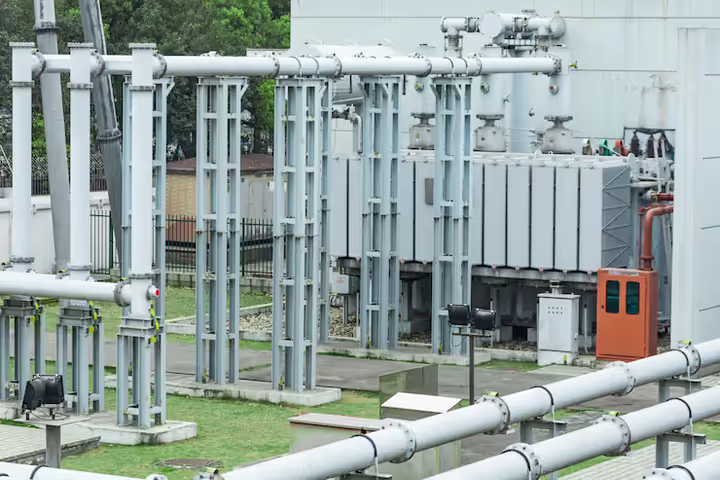
Gas Compressors Basics and Their Role in Industrial Operations
Gas compressors are mechanical devices designed to increase the pressure of gases by reducing their volume. These systems are widely used across industries where gases need to be transported, stored, processed, or delivered at controlled pressure levels. Gas compressors play a critical role in manufacturing, energy production, chemical processing, refrigeration, healthcare, and transportation systems.
The main purpose of a gas compressor is to move gas efficiently while maintaining operational stability and safety. Different industries use various compressor technologies depending on the gas type, pressure requirements, and operational environment.
Modern industrial systems rely heavily on gas compressors because they help improve process efficiency, maintain consistent gas flow, and support automated operations.
How Gas Compressors Work
Gas compressors operate by drawing in gas from a low-pressure area and compressing it into a smaller space. This increases the gas pressure before it is discharged into pipelines, storage systems, or industrial machinery.
The compression process generally includes:
- Gas intake through an inlet valve
- Reduction of gas volume using mechanical force
- Pressure increase inside the compression chamber
- Cooling and discharge of compressed gas
Some compressors use pistons, while others rely on rotating impellers or screws. The design depends on the intended industrial application and pressure range.
Compressors may operate continuously in industrial plants or intermittently in smaller systems. Many modern systems include digital monitoring tools for temperature, pressure, vibration, and efficiency tracking.
Major Types of Gas Compressors
Positive Displacement Compressors
These compressors trap a fixed amount of gas and mechanically reduce its volume.
Common examples include:
- Reciprocating compressors
- Rotary screw compressors
- Rotary vane compressors
- Scroll compressors
Positive displacement compressors are commonly used in manufacturing facilities, gas pipelines, refrigeration systems, and industrial automation environments.
Dynamic Compressors
Dynamic compressors increase gas velocity and convert kinetic energy into pressure.
Examples include:
- Centrifugal compressors
- Axial compressors
These systems are frequently used in:
- Power generation plants
- Petrochemical industries
- Large-scale natural gas processing
- Aviation systems
Main Components of Gas Compressors
| Component | Function |
|---|---|
| Compressor Motor | Provides mechanical power |
| Compression Chamber | Reduces gas volume |
| Inlet Valve | Controls incoming gas flow |
| Discharge Valve | Releases compressed gas |
| Cooling System | Prevents overheating |
| Lubrication System | Reduces friction and wear |
| Pressure Sensors | Monitor system pressure |
| Control Panel | Manages operations and safety |
These components work together to maintain efficient and safe compressor operation in industrial settings.
Importance of Gas Compressors in Industry
Gas compressors are essential because they support critical industrial processes that depend on controlled gas pressure and continuous flow.
Industries depend on compressors for:
- Gas transportation through pipelines
- Industrial refrigeration systems
- Pneumatic equipment operation
- Medical oxygen systems
- Chemical processing operations
- Renewable energy infrastructure
- Industrial automation systems
Without reliable gas compression systems, many industrial processes would experience pressure instability, reduced efficiency, or operational interruptions.
Industrial Applications of Gas Compressors
Oil and Gas Industry
- Gas compressors are heavily used in upstream, midstream, and downstream energy operations.
- They support natural gas transportation, gas injection, refining operations, and pipeline pressure management.
- Manufacturing plants use compressed gas systems for powering pneumatic tools, automated machinery, and material handling equipment.
Chemical Processing
- Chemical facilities require stable gas pressure for reactors, storage systems, and industrial processing equipment.
- Hospitals and medical laboratories use compressors in oxygen supply systems, medical air systems, and respiratory equipment.
Refrigeration and HVAC Systems
- Compressors are a core part of refrigeration cycles in cooling systems, industrial cold storage, and climate control technologies.
- Hydrogen energy projects and carbon capture systems increasingly rely on advanced gas compression technologies.
Key Features of Modern Gas Compressors
Energy Efficiency
- Modern compressors are designed to reduce energy consumption using variable speed drives, optimized airflow systems, and intelligent control technologies.
- Industrial Internet of Things (IIoT) platforms now allow operators to monitor compressor performance in real time.
Low Maintenance Design
- Newer systems use durable materials and automated diagnostics to reduce maintenance requirements.
- Advanced acoustic engineering helps lower operational noise in industrial environments.
- Modern compressors are built to support emissions control and environmentally responsible industrial operations.
Common Problems Solved by Gas Compressors
Gas compressors help industries overcome several operational challenges.
Pressure Instability
- Compressors maintain stable gas pressure for industrial processes and transportation systems.
- Compression systems improve gas movement across pipelines and production facilities.
Energy Loss
- Efficient compressor technologies help reduce unnecessary energy consumption.
- Reliable compressors support continuous industrial operation with minimal downtime.
- Compressed gas systems allow gases to be stored more effectively in limited spaces.
Recent Trends and Developments
The gas compressor industry has experienced major technological improvements during 2025 and 2026.
AI-Based Predictive Maintenance
- In 2025, many industrial operators expanded the use of artificial intelligence for compressor diagnostics and predictive maintenance.
- AI systems analyze vibration, pressure, and thermal data to identify equipment problems before failures occur.
Hydrogen Compression Technologies
- Hydrogen energy infrastructure projects increased significantly in 2025, creating demand for specialized hydrogen compressors designed for clean energy applications.
- Carbon capture and storage facilities are increasingly using high-pressure gas compression systems to transport captured carbon dioxide.
Digital Twin Technology
- Industrial facilities now use digital twin systems to simulate compressor performance and improve operational efficiency.
- Several industrial regions introduced stricter energy efficiency requirements for industrial compression equipment during 2025, encouraging adoption of advanced low-emission systems.
Regulations and Industrial Standards
Gas compressors are subject to industrial safety and environmental standards in many countries.
ISO Standards
The International Organization for Standardization provides guidelines for compressor performance, testing, and safety.
The American Society of Mechanical Engineers establishes pressure vessel and piping standards relevant to compressor systems.
Environmental Regulations
Industrial operators must follow emissions control and energy efficiency requirements related to compressor operation.
Workplace Safety Standards
Industrial facilities must maintain safe operating procedures for high-pressure gas systems and rotating machinery.
Compliance with these regulations helps improve operational safety, environmental responsibility, and equipment reliability.
Useful Tools and Learning Resources
Professionals working with gas compressors often use specialized tools and platforms for monitoring, maintenance, and training.
Industrial Monitoring Platforms
- Siemens industrial monitoring systems
- Honeywell process automation tools
- Schneider Electric industrial solutions
- Emerson automation technologies
Engineering Software
- CAD design software
- Compressor simulation tools
- Predictive maintenance platforms
- Industrial analytics systems
Learning Resources
- Industrial engineering training programs
- Mechanical engineering textbooks
- Compressor manufacturer documentation
- Industrial safety certification courses
These resources help technicians, engineers, and operators understand compressor technologies and operational best practices.
Future of Gas Compressors
Gas compressor technology is expected to continue evolving as industries focus on energy efficiency, automation, and sustainability.
Future developments may include:
- Expanded AI-driven automation
- Higher efficiency compressor materials
- Increased hydrogen infrastructure support
- Advanced remote diagnostics
- Integration with renewable energy systems
- Lower-emission industrial operations
As industries modernize infrastructure, compressors will remain essential for industrial productivity and energy management.
FAQs
What is the main purpose of a gas compressor?
A gas compressor increases gas pressure by reducing gas volume. It helps move, store, and process gases efficiently in industrial systems.
What industries use gas compressors?
Gas compressors are used in oil and gas, manufacturing, healthcare, refrigeration, chemical processing, power generation, and renewable energy industries.
What is the difference between positive displacement and dynamic compressors?
Positive displacement compressors compress fixed gas volumes mechanically, while dynamic compressors increase gas velocity and convert it into pressure energy.
Why are energy-efficient compressors important?
Energy-efficient compressors reduce electricity consumption, improve operational performance, and support environmental sustainability goals.
How are modern compressors monitored?
Modern systems use smart sensors, industrial automation software, and predictive maintenance technologies to monitor temperature, pressure, vibration, and performance.
Conclusion
Gas compressors are essential industrial systems that support gas transportation, manufacturing operations, refrigeration, healthcare, and energy infrastructure. Their ability to increase gas pressure efficiently makes them critical for modern industrial processes.
Advancements in automation, energy efficiency, AI-driven monitoring, and hydrogen compression technologies are transforming the industry. Modern compressors are becoming smarter, more efficient, and better aligned with environmental and operational requirements.
As industries continue adopting advanced engineering systems and cleaner energy technologies, gas compressors will remain a key component of industrial productivity, safety, and infrastructure development.